
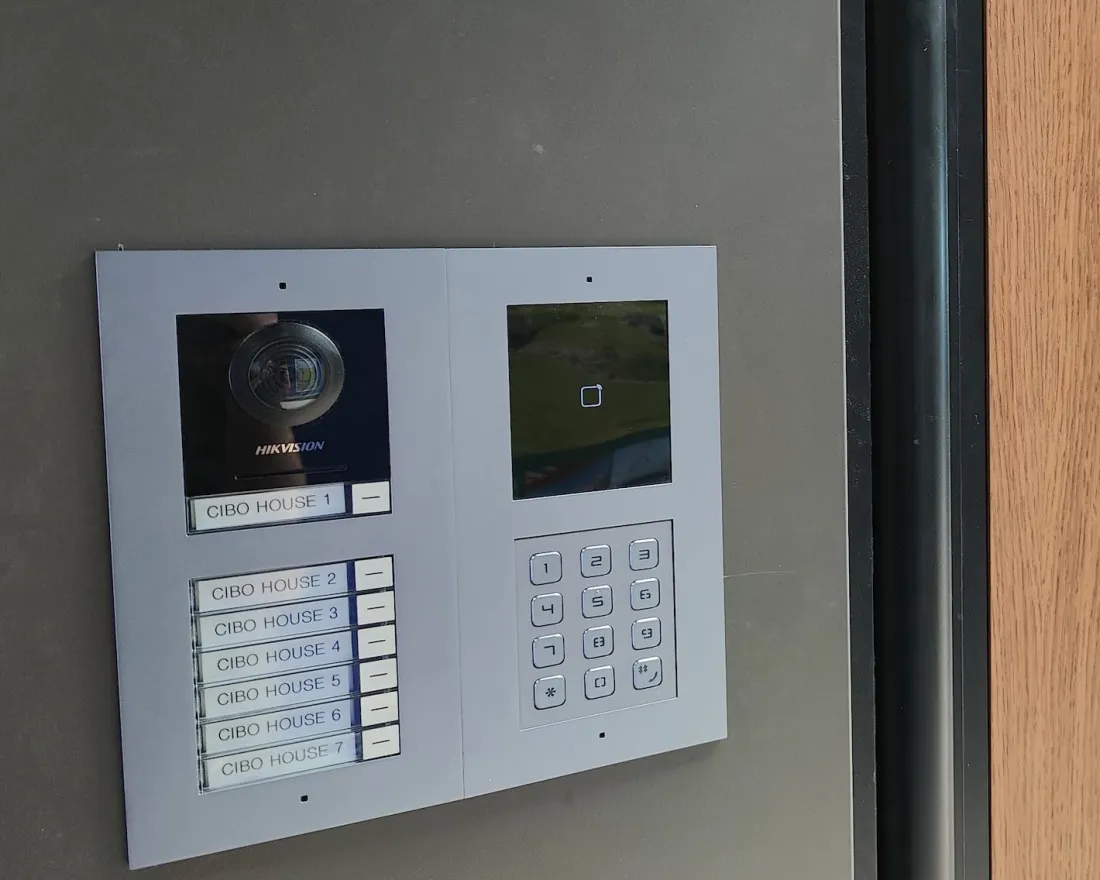
- A video intercom lets you see and speak to visitors before letting them in.
- Keypads, cards and fobs let staff and regular users let themselves in.
- Most businesses need both: an intercom for visitors and deliveries, and credentials for everyone who comes and goes daily.
Start with Who Needs to Get In
Before comparing hardware, list who uses each door and how often. The answers usually point clearly to the right mix.
Staff & Regulars
Need access every day, sometimes out of hours.
Visitors & Deliveries
Should be seen and let in by someone.
Contractors & Tenants
Need access at certain times, or to certain doors only.
The Main Options
Video Intercom
A camera and call button at the door; answer on a screen, handset or phone app and release the door remotely.
- Best for
- Receptions, visitors and deliveries.
- Watch out for
- Someone has to answer it, so it suits visitors better than staff.
Keypad
Users enter a code to open the door.
- Best for
- A small team, with nothing to carry.
- Watch out for
- Codes get shared and need changing when someone leaves.
Cards & Fobs
Each user presents their own card or fob to a reader by the door.
- Best for
- Larger teams, several doors, or controlling who goes where.
- Watch out for
- Credentials need issuing and collecting.
How They Compare
| Video Intercom | Keypad | Cards & Fobs | |
|---|---|---|---|
| See who’s at the door | Yes | No | No |
| Users let themselves in | No | Yes | Yes |
| Access traceable to a person | – | Not if codes are shared | Yes, on networked systems |
| Remove one person’s access | – | Change the code for everyone | Cancel just their card or fob |
| Time & door restrictions | – | Limited | Yes, on networked systems |
Combining Them
A common set-up for a business:
- Main EntranceA video intercom for visitors, plus a card or fob reader for staff.
- Internal DoorsReaders on stock rooms, offices or server cupboards.
- CamerasLink door entry with CCTV so the approach to each door is recorded.
Practical Points to Plan For
- The lock – the door needs a suitable electric lock or release, and the door and frame need to suit it.
- Power and network – readers, intercoms and locks need power and cabling back to the controller or network.
- Growth – choose a system that can add doors and users later.
Doors on escape routes must still let people out quickly in an emergency, which affects the type of lock and release that can be used.
HISO install video intercoms, keypads, card and fob systems for businesses and homes, and can advise on the right combination after a site survey.